
Fredonia's US$1.49bn EDM NPV rests on scale—but also on metal prices and inferred resources
The El Dorado Monserrat PEA outlines average production of 146,000 oz AuEq a year over more than 17 years, initial capital of US$345.7 million and post-tax NPV10 of US$1.494 billion. The schedule materially relies on inferred resources and uses gold and silver price assumptions of US$3,800/oz and US$45/oz.
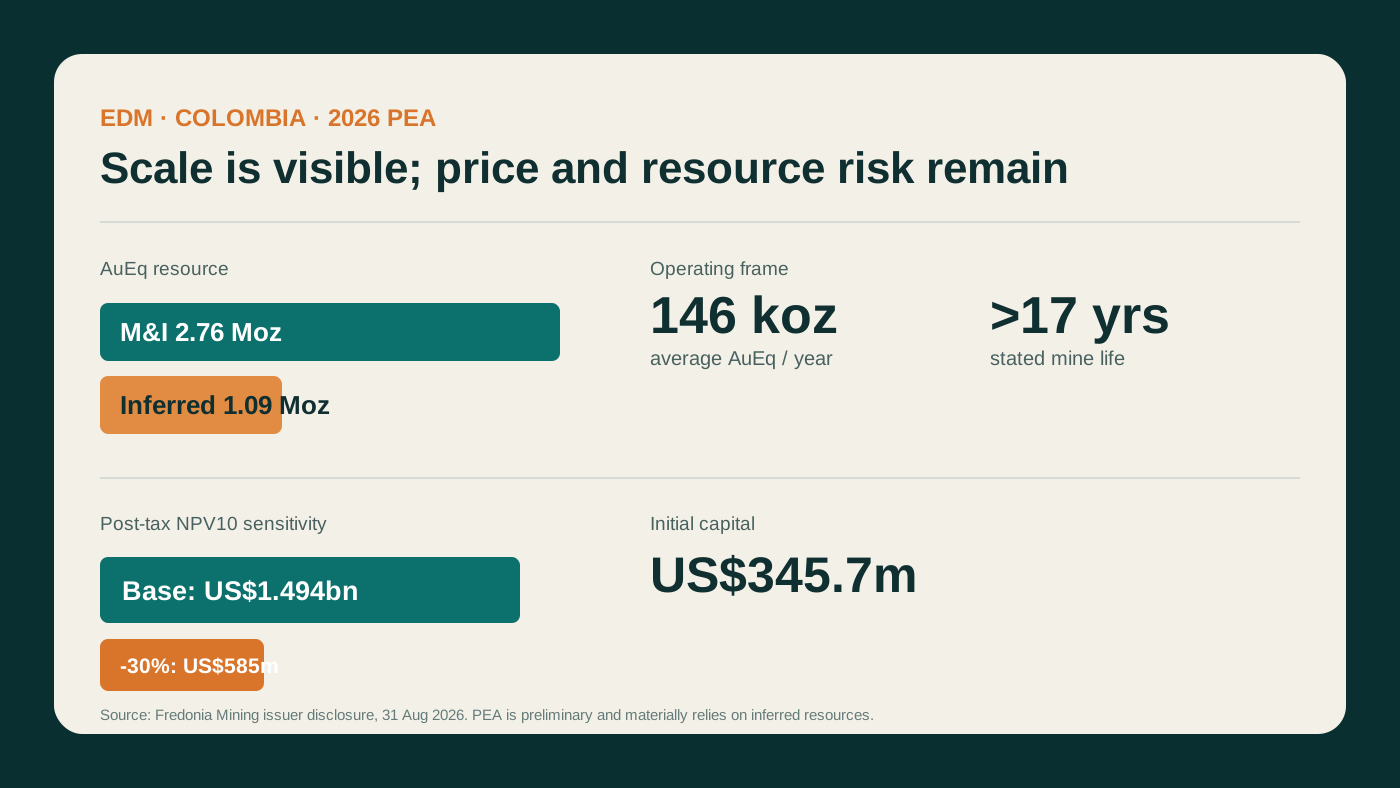
El Dorado Monserrat's first PEA presents a large gold-silver project, but the headline valuation is not the same as a reserve-backed development plan. The mine schedule materially relies on inferred resources, while its base case uses gold at US$3,800/oz and silver at US$45/oz.
Resource scale and mine-plan confidence are different questions
The resource and PEA share an effective date of 17 August 2026. Fredonia reports 126 Mt of measured and indicated material grading 0.47 g/t gold and 12.66 g/t silver, or about 2.76 Moz AuEq, plus 74 Mt of inferred material containing about 1.09 Moz AuEq. The concept combines 7.3 Mtpa of crushed and agglomerated heap-leach feed with 2.8 Mtpa of medium-grade run-of-mine leach feed. No mineral reserve has been declared, and the material use of inferred resources limits the confidence that can be attached to the production schedule.
The valuation carries explicit price and recovery conditions
The company reports post-tax NPV10 of US$1.494 billion, post-tax IRR of 65% and initial capital of US$345.7 million, using a 10% discount rate. The mine schedule assumes gold at US$3,800/oz and silver at US$45/oz, while the resource-equivalent calculation uses recovery assumptions of 85% for gold and 80% for silver. When price, grade and recovery are each reduced by 30%, post-tax NPV10 falls to US$585 million. That sensitivity does not erase the project's scale, but it shows why the base case cannot be read independently of its assumptions.
The technical report must convert the headline into an execution test
Fredonia expects to file the full technical report within 45 days of the release. The next review should test annual grade scheduling, the proportion of inferred material, metallurgical variability, water and environmental approvals, engineering scope and financing. Initial capital is an estimate, not committed funding. The PEA becomes more decision-useful only as resource conversion, detailed engineering, permits and an executable funding plan converge.